Multi-Channel Demand Generation: Why Single-Channel Strategies Are Leaving Revenue on the Table
Modern B2B buyers engage across multiple touchpoints, making single-channel strategies ineffective. This article explains how orchestrated multi-channel campaigns aligned with buyer intent and backed by multi-touch attribution drive stronger pipeline, higher conversion rates, and predictable revenue growth.
Edmund Fernandes
5/2/20261 min read
Edmund Fernandes
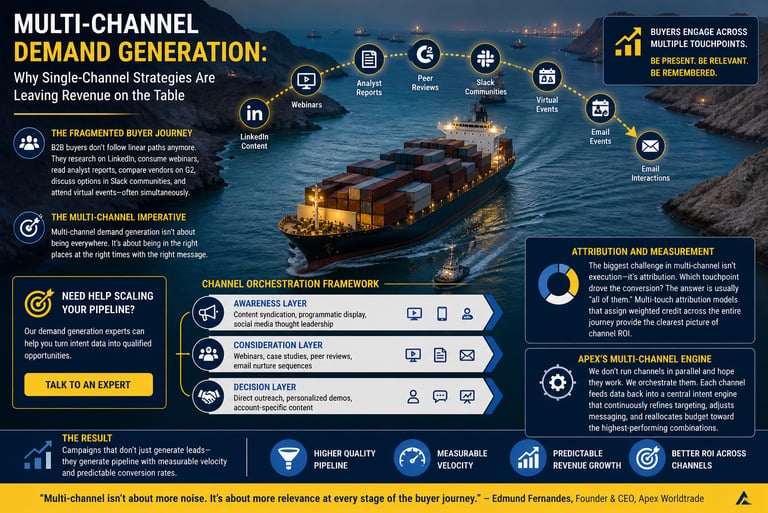
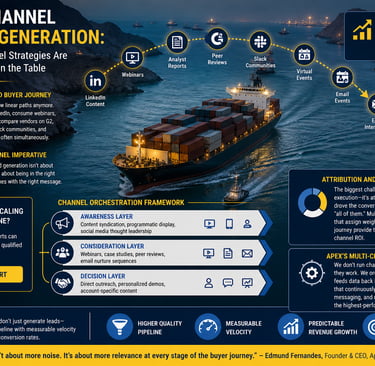
The Fragmented Buyer Journey
B2B buyers don't follow linear paths anymore. They research on LinkedIn, consume webinars, read analyst reports, compare vendors on G2, discuss options in Slack communities, and attend virtual events—often simultaneously.
The Multi-Channel Imperative
Multi-channel demand generation isn't about being everywhere. It's about being in the right places at the right times with the right message.
Channel Orchestration Framework
Awareness Layer: Content syndication, programmatic display, social media thought leadership
Consideration Layer: Webinars, case studies, peer reviews, email nurture sequences
Decision Layer: Direct outreach, personalized demos, account-specific content
Attribution and Measurement
The biggest challenge in multi-channel isn't execution—it's attribution. Which touchpoint drove the conversion? The answer is usually "all of them." Multi-touch attribution models that assign weighted credit across the entire journey provide the clearest picture of channel ROI.
Apex's Multi-Channel Engine
We don't run channels in parallel and hope they work. We orchestrate them. Each channel feeds data back into a central intent engine that continuously refines targeting, adjusts messaging, and reallocates budget toward the highest-performing combinations.
The result: campaigns that don't just generate leads—they generate pipeline with measurable velocity and predictable conversion rates.
Contact US
Phone
info@apexworldtrade.com
+1-630-363-2716
© 2026 Apex Worldtrade Media Partners. All Rights Reserved.